.svg)
Key Takeaways
- 1🏏 Hugo Tani-Kelly became the first Japanese player to score a century at U19 World Cup level, finishing with an average of 200 runs
- 2🌏 Japan competed against three Full Member nations (Australia, Sri Lanka, Ireland) in their maiden U19 World Cup appearance
- 3👨✈️ Captain Kazuma Kato-Stafford led effectively with bat and ball, taking 2/42 against Ireland
- 4🔮 More than half of Japan's squad remains eligible for the next U19 World Cup, ensuring valuable experience carries forward
- 5🎌 Japan maintained their unique cricketing identity while proving they belong on the world stage
"Japan finish the group stage of their maiden Under-19 World Cup campaign empty-handed, but full of pride and optimism. "
Japan's Historic U19 World Cup Debut: Hugo Tani-Kelly's Century Marks 'Unbelievable Experience'
Japan's inaugural appearance at the ICC Under-19 Men's Cricket World Cup may have concluded without a victory in the group stage, but the Asian nation has departed with their heads held high and a treasure trove of invaluable experience against some of cricket's elite nations.
Facing Australia, Sri Lanka, and Ireland in Group A, the young Samurai demonstrated remarkable resilience and showcased moments of individual brilliance that will long be remembered in Japanese cricketing history.
Hugo Tani-Kelly Etches Name in History Books
The tournament's crowning achievement for Japan came through 17-year-old Hugo Tani-Kelly, who became the first Japanese player to score a century at this level. His magnificent unbeaten 101 off 162 balls against Sri Lanka reached the milestone on the second-last delivery of their innings, a moment of pure drama befitting such a historic occasion.
Tani-Kelly's composure under pressure was further evidenced against defending champions Australia, where he compiled an unbeaten 79 off 135 deliveries. The young batter finished the group stage averaging an extraordinary 200 runs, establishing himself as a genuine prospect for Japanese cricket's future.
Batting Contributions Across the Order
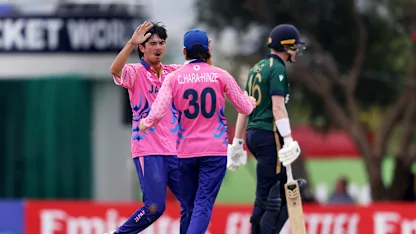
While Tani-Kelly grabbed the headlines, Japan's batting depth was evident throughout the tournament. Charles Hara-Hinze produced a brave knock of 57 off 70 balls against Ireland, anchoring the innings with maturity beyond his years.
The consistent contributions from multiple batters up and down the order demonstrated that Japan's success wasn't reliant on individual performances alone, but rather a collective effort that bodes well for future tournaments.
Bowling Unit Shows Competitive Edge
Captain Kazuma Kato-Stafford led from the front with the ball, claiming figures of 2/42 from nine overs in their final group match against Ireland. His ability to contain and take wickets against quality opposition highlighted his value to the side.
Timothy Moore emerged as another bowling threat, taking multiple wickets across the tournament including a crucial double strike against Ireland and three wickets against Sri Lanka. These performances kept opponents honest and demonstrated Japan's ability to compete with the ball.
Captain Kato-Stafford Reflects on Historic Campaign
Following their final group match, captain Kazuma Kato-Stafford offered a thoughtful perspective on what the tournament meant for Japanese cricket.
"It's not every day an Associate nation gets to come up against three full Test level nations and three of the best in the world."
The captain expressed immense pride in his team's performances:
"Absolutely huge. An unbelievable experience. We've got a number of guys, I think more than half the squad, available for the next World Cup, so it's a really good experience for them, especially playing under pressure, playing against some world class players, who I have no doubt will go onto big things."
Lessons Learned and Growth Achieved
Kato-Stafford outlined the key learnings from their campaign against elite opposition.
"We've learned how to handle a lot of pressure against us. A few teams got off to really good starts against us, so being able to bounce back from that, being able to use our different options."
The captain noted the evolution in their bowling approach:
"Normally we've been reliant on a few bowlers through the middle, this time around we've been able to rely on a few other guys."
His assessment of the batting unit was equally positive:
"With the bat, especially, I've been really happy that I've been able to rely on a number of players who have really stood up for us."
Japan's Cricket Identity Shines Through
Perhaps most significantly, Japan maintained their unique cricketing identity throughout the tournament despite facing vastly more experienced opposition.
"Just being able to put Japan Cricket on the world stage is just a really good honour and hopefully it's onto bigger and better things from here."
His concluding remarks encapsulated the team's spirit:
"Happy overall with the experience, the fight we've shown and being able to play our Japan way."
Looking Ahead: Tanzania and Future Horizons
Japan's tournament isn't entirely over, with a grading fixture against Tanzania scheduled for Saturday. Both nations will be seeking their first victory of the competition, providing Japan with one final opportunity to end their campaign on a winning note.
With more than half the squad eligible for the next U19 World Cup, Japan's investment in this tournament extends far beyond the immediate results. The experience gained competing against Australia, Sri Lanka, and Ireland will prove invaluable as these young cricketers continue their development.
The Future of Japanese Cricket
Japan's performance at their maiden U19 World Cup signals a promising trajectory for cricket in the country. The emergence of talents like Hugo Tani-Kelly, the leadership qualities displayed by Kazuma Kato-Stafford, and the collective fighting spirit shown by the entire squad suggest that Japanese cricket is on an upward curve.
As Associate cricket continues to grow globally, Japan has demonstrated they belong on the world stage. Their fearless approach against Full Member nations and the historic milestones achieved during this tournament provide a foundation upon which future success can be built.
The Samurai may return home without victories in the group stage, but they carry with them something far more valuable: the experience, confidence, and belief that they can compete at the highest level of youth cricket.
Related Stories