.svg)

Key Takeaways
- 1Khawaja's six defining centuries demonstrate evolution across 15 years, from comeback narratives to age-defying excellence
- 2His fourth-innings 141 against Pakistan in 2022 exemplified psychological resilience in high-pressure chases
- 3His double-century against Sri Lanka at 37 established him as only the second Australian double-centurion and oldest to achieve this milestone on the island
- 4Each significant innings revealed different technical and mental dimensions, suggesting Test cricket mastery requires sustained adaptation rather than static technique
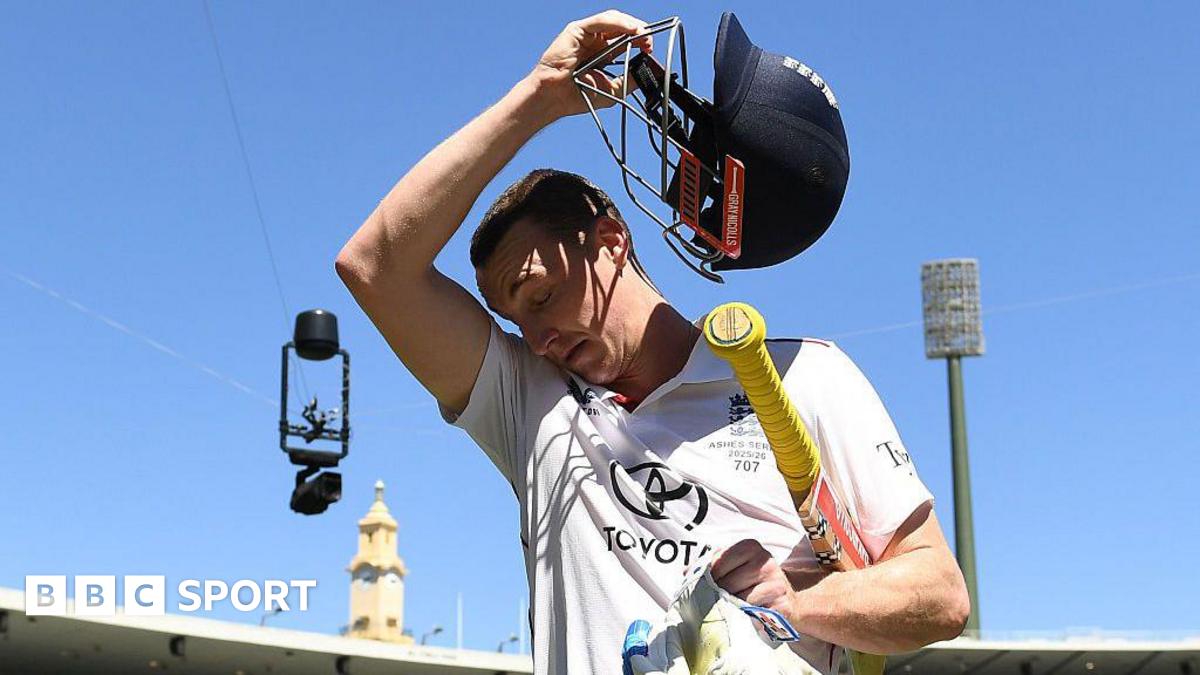
"Usman Khawaja might be done with Test cricket, but leaves behind some magical memories - here's our pick of the best of them"
Khawaja's Test Cricket Masterclasses: Six Defining Innings Analysed
Usman Khawaja's Test career concluded at the SCG after 88 matches, but his statistical legacy—16 centuries and 6,206 runs—obscures the tactical sophistication embedded within his most significant innings. Six performances stand apart, each illuminating different dimensions of Test cricket mastery.
174 vs New Zealand, Brisbane 2015: The Redemption Narrative
After 28 months away from international cricket, Khawaja faced a fundamental question: could a player regain Test-level form after such extended absence? His 174 at the Gabba answered definitively. Arriving when Australia needed stabilization at number three, he batted with the methodical precision of someone who understood this was his final opportunity. The innings wasn't flashy—it was necessary. It transformed a struggling middle order into a functional unit, establishing the foundation upon which Australia could build.
141 vs Pakistan, Dubai 2018: The Fourth-Innings Fortress
Few Test innings demand the psychological resilience required when chasing 462 runs in the fourth innings. Khawaja's 141 in this context transcended batting statistics—it became a masterclass in pressure management. Opening the batting in a chase, he absorbed the new-ball threat, navigated the transition phases, and constructed partnerships that made the improbable seem achievable. The player-of-the-match award reflected not just runs scored, but the mental fortitude required to execute them.
160 vs Pakistan, Karachi 2022: The Homecoming Century
Playing in his ancestral homeland after 24 years, Khawaja faced a pitch offering Pakistan only 148 runs in their first innings. His 160 from 193 balls demonstrated technical range against demanding conditions. The century's significance lay in its execution against a hostile environment—both meteorological and psychological—where personal history intersected with professional responsibility.
141 vs England, Edgbaston 2023: The Immovable Object
England's Edgbaston pitch traditionally punishes visiting batsmen. Khawaja's 141 represented something extraordinary: he batted longer than England's entire first innings. Arriving at 29 for two, then 67 for three, then 148 for four, he became the stabilizing force Australian cricket desperately required. His previous average in England—17.78—made this century statistically improbable. That improbability transformed it into a statement about technical evolution and mental resilience.
91 and 104* vs Pakistan, Rawalpindi/Lahore 2022: The Series Dominance
Scoring 496 runs at an average of 165.33 across the Pakistan series, Khawaja demonstrated that Test excellence at this level requires sustained performance, not isolated brilliance. His 91 in Rawalpindi and 104* in the third Test showed a batsman adapting to different pitch conditions and bowling attacks while maintaining technical consistency.
232 vs Sri Lanka: The Double-Century Milestone
Becoming only the second Australian to score a Test double-century, Khawaja shattered the Sri Lankan soil record (166 by Justin Langer). At 37, he became the oldest player to achieve this milestone on the island. His 266-run partnership with Steve Smith rewrote Asian soil partnership records, demonstrating that Test cricket excellence doesn't necessarily decline with age—it evolves.
The Technical Thread
Across these six innings, a pattern emerges: Khawaja's greatest performances arrived when circumstances demanded technical excellence married with psychological resilience. His Test legacy represents not merely statistical accumulation, but the transformation of adversity into mastery.
Related Stories